




Reduce Your Cyber Insurance Premiums with Zaperon Zero Trust
As the financial impact of data breaches escalates annually, numerous enterprises are turning to cyber insurance as a risk mitigation strategy. According to the latest Fastly Global Cybersecurity Report, companies have experienced a 9% reduction in their turnover over the past year due to cyber attacks. In fact, businesses are embedding cyber insurance requirements into supplier contracts to shield themselves against financial liabilities.
The cost of cyber insurance coverage is spiraling out of control. Recent analysis from Swiss Re shows that global cyber insurance premiums are set to soar to US $15.6 billion by 2025, with businesses facing relentless year-on-year price hikes. What’s more concerning is that insurers, under pressure from mounting claims and systemic risks, are tightening coverage, adding exclusions, and passing costs directly onto customers. This means organizations are paying higher premiums for less protection, leaving many struggling to afford adequate coverage. Fortunately, there exists a viable approach to mitigate these expenses and reduce insurance premiums.
Why Organizations Take Cyber Insurance?
- Risk Mitigation Strategy: According to IBM study, the global average cost of a data breach in 2025 was $4.44 million, while for US companies this cost has reached an all-time high of $10.22 million. Cyber insurance helps offset such risks, covering damages from ransomware, breaches, and cyber extortion.
- Incident Response Costs: The insurance covers the expenses related to incident response, including forensic investigations, legal fees, notification costs, and crisis management, ensuring rapid containment and recovery from cyber incidents. With 317 million ransomware attacks globally in 2023 (as per a ransomware report), the insurance coverage is crucial.
- Regulatory Compliance: Cyber insurance assists organizations in meeting regulatory requirements by providing coverage for fines and penalties imposed due to non-compliance with data protection laws like GDPR, CCPA, and HIPAA.
- Business Interruption: Downtime caused by cyberattacks leads to lost income. Insurance helps maintain operational continuity.
- Reputation Management: Cyber insurance often covers the costs associated with public relations efforts and media communications needed to manage and mitigate reputational damage following a cybersecurity incident.
- Third-Party Liability: It provides protection against third-party liabilities, covering legal claims arising from data breaches that affect customers, partners, or other stakeholders, thus shielding organizations from costly litigation.
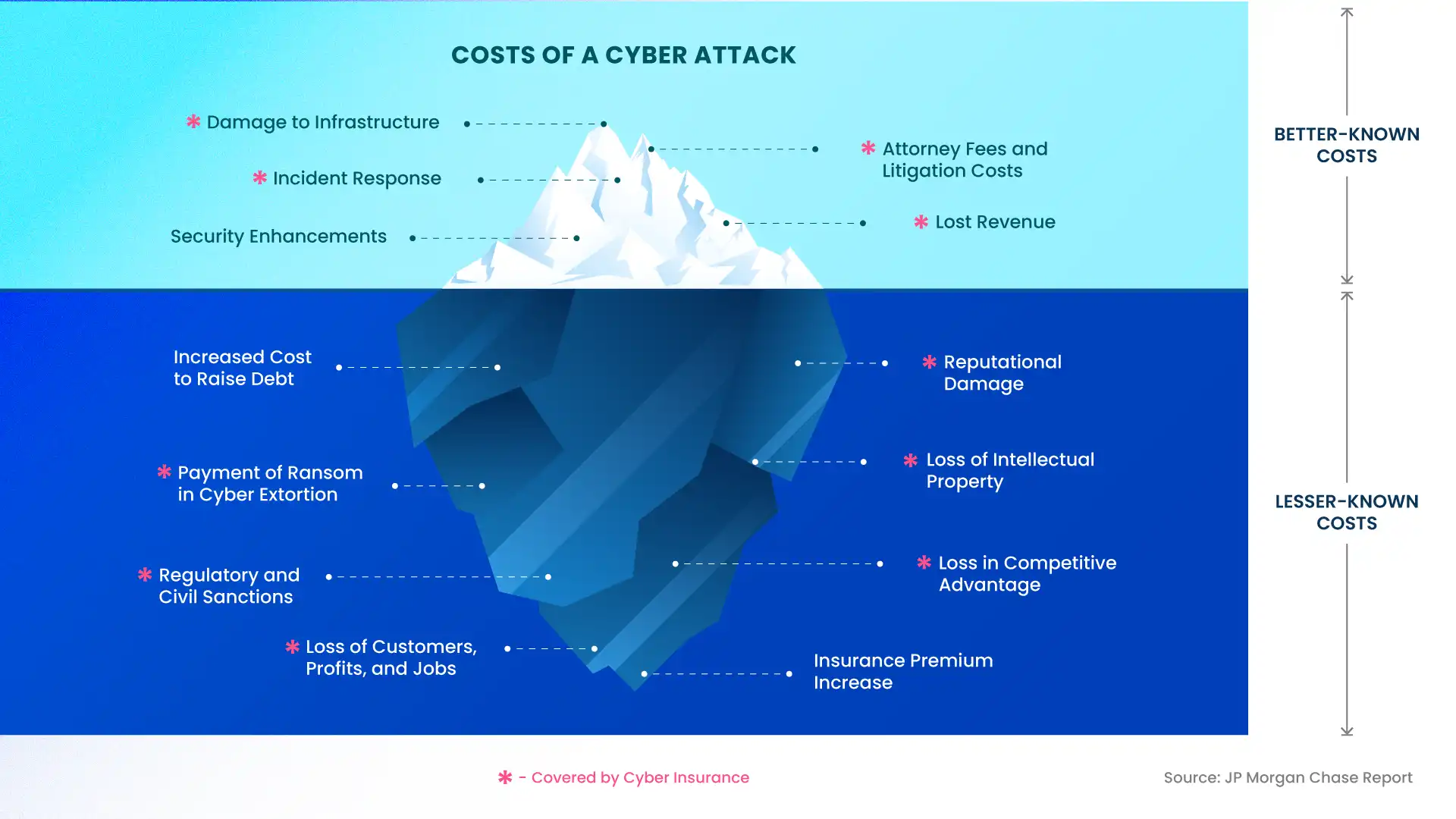
Variables Affecting Cybersecurity Insurance Premiums
According to Insureon, businesses typically pay an average premium of $145 per month, totaling approximately $1,740 annually, for cyber insurance coverage. Whereas, the average cost of a cybersecurity insurance claim for a small to medium enterprise is $345,000 to $10 million for big enterprises. Therefore, it is imperative to understand the factors considered by insurers while determining cyber insurance premiums.
- Cybersecurity Maturity: Insurers assess an organization's cybersecurity infrastructure, such as firewalls, application access control and incident response plans, to gauge risk. Strong cybersecurity controls reduce premiums, while inadequate measures lead to higher costs.
- Industry-Specific Influence: Cyber insurance premiums are significantly influenced by industry-specific risk profiles. According to the Verizon Data Breach Investigations Report 2024, industries such as finance, healthcare, public administration, and manufacturing face the highest cyberattack likelihood. Public administration and finance sectors face a 430% and 45% higher likelihood respectively of being attacked compared to sectors that handle less sensitive data, such as manufacturing.
- Historical Claims and Loss Records: A clean claims history and minimal losses signal lower risk perception to insurers, resulting in more favorable premiums. Entities with frequent claims or substantial losses are classified as higher risk and consequently face higher premiums.
- Business Size and Revenue: Larger organizations with higher revenue streams generally face higher cyber insurance premiums. This is because of their greater exposure to cyber risks and potential for substantial financial losses in the event of a cyber incident.
- Coverage Type and Extent: The nature and extent of cyber insurance coverage also critically impact premium costs. Comprehensive policies that cover a wide range of risks, including data breaches and business interruptions, command higher premiums compared to policies with limited coverage options.
- Regional Jurisdiction and Regulatory Landscape: Businesses operating in regions such as North America, Europe, Asia-Pacific, South America, Middle East, and Africa face the highest cyber insurance premiums due to stringent regulatory landscapes. Compliance with robust data protection laws such as GDPR, PCI-DSS, HIPAA, GBLA, SOX, RBI, and SEBI imposes significant cybersecurity requirements, leading to increased cyber threat exposure and higher insurance costs.
How Zaperon Helps You Reduce Cyber Insurance Premiums?
Insurers carefully scrutinize an organization's cybersecurity posture when assessing cyber insurance eligibility. Effective cybersecurity controls such as use of Identity & Access Management, MFA and password-rotation policies are crucial for obtaining coverage, and insurance may even be denied in their absence. In fact, organizations equipped with robust security solutions can get a 20% reduction in insurance premiums over time.
Zaperon’s unified zero trust platform offers comprehensive cybersecurity that not only strengthens your organization’s security posture but also lowers cost of cyber insurance coverage.
- Robust Authentication Mechanism: As per Verizon DBIR 2023, over 86% of data breaches are due to compromised employee credentials. Zaperon employs PKI-based passwordless technology that is the strongest form of authentication, significantly strengthening security compared to traditional methods.
- Phishing-Resistant Multi-Factor Authentication (MFA): Enforcing Multi-Factor Authentication (MFA) across all critical systems and applications is a crucial strategy for preventing unauthorized access to enterprise applications, data and cloud infrastructure. With an MFA that validates 15+ factors related to user behavior, device posture and context, Zaperon provides a high level of assurance and mitigates risks associated with phishing attacks, a critical factor for insurers assessing cybersecurity risk.
- Continuous Zero Trust Access Policies: Cybersecurity Insiders report that about 74% of businesses experienced occurrences of insider breaches. To prevent such threats, Zaperon leverages the Zero Trust framework that operates on the principle of "never trust, always verify," continuously validating every user and device attempting to access network resources, and enforcing least privilege access. This ensures that access permissions are dynamically adjusted according to real-time risk assessments, reducing the potential impact of unauthorized access incidents.
- Strengthen Web Security: Securing web applications and data transmission is crucial for protecting against cyber threats. Zaperon enhances security by ensuring sensitive data is safeguarded and preventing potential attacks. This added layer of protection strengthens your overall security posture, contributing to lower cyber insurance premiums by reducing risk factors.
- Proactive Threat Detection and Response: By integrating proactive identity threat detection and response mechanisms, Zaperon enables organizations to detect and mitigate potential threats before they escalate. This proactive stance enhances overall cybersecurity resilience and lowers the probability of successful identity-based attacks.
Conclusion
In conclusion, while cyber insurance premiums reflect the risk profile of businesses, proactive cybersecurity measures from platforms like Zaperon can significantly mitigate risks and potentially reduce costs. Investing in cybersecurity today is not just about protecting data—it's about safeguarding the future of your business against evolving cyber threats. So, insurers are likely to offer more competitive rates to organizations that are proactive in implementing robust cybersecurity measures like those provided by Zaperon.


